

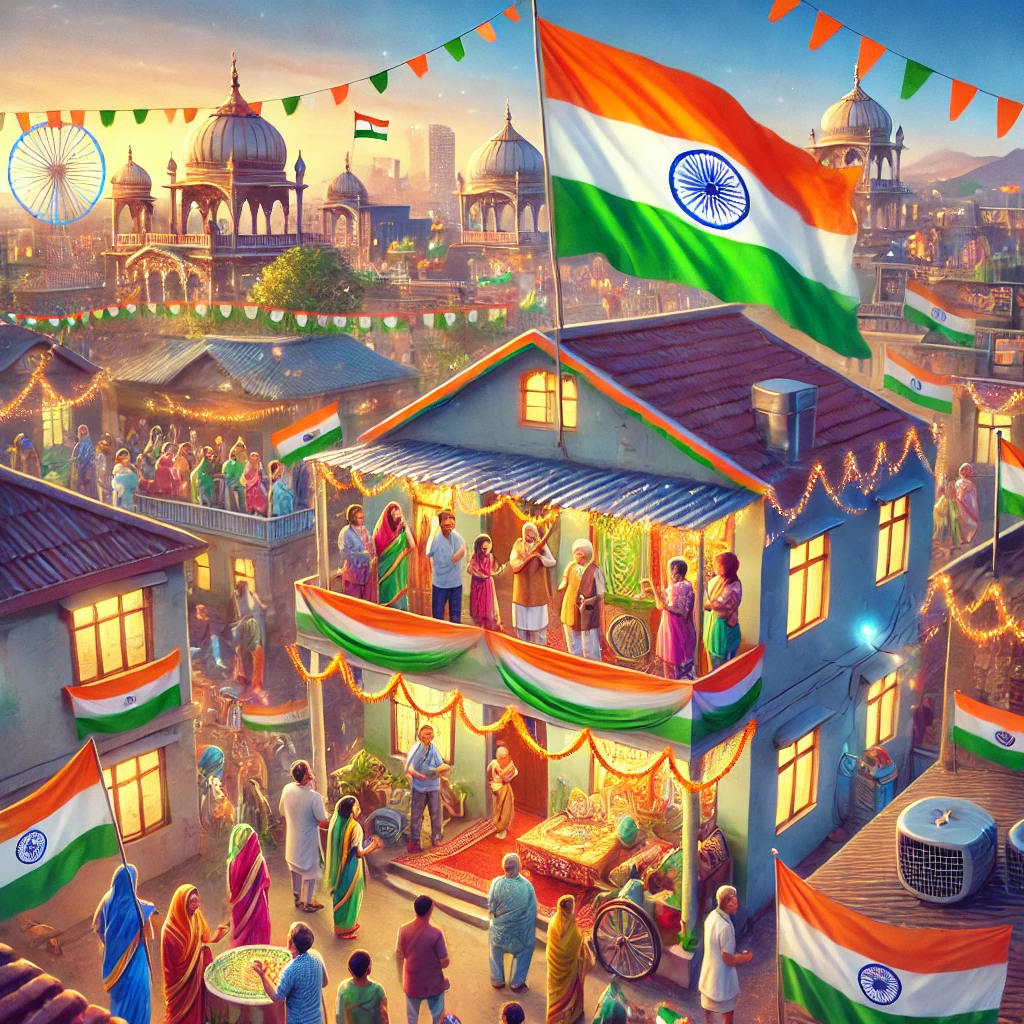
The Tiranga—India’s tricolour—has the rare power to condense a nation’s history, values, and aspirations into three simple bands of color and a wheel at its center. When it flutters on a rooftop or hangs from a balcony, it signals a public commitment to courage, peace, and growth. At damanphantom, we invite families, neighbors, and communities to participate in the Har Ghar Tiranga movement by bringing this symbol into everyday life in ways that are respectful, inclusive, and inspiring.
Har Ghar Tiranga is not merely about hoisting a flag for a day — it’s an invitation to reconnect with civic values and to make small acts of nationhood part of routine life. This can be as simple as explaining the meaning of the Ashoka Chakra to children, reading aloud a short story about a local freedom fighter, or starting a small neighborhood tradition that honors public service. These micro-rituals deepen the meaning behind the flag and link personal life with collective memory.
Proper display and care of the flag are central to this participation. The Flag Code of India promotes dignity and respect: the flag should never touch the ground, must be displayed in a clean and untorn state, and be handled in ways that honor its symbolic importance. This page provides straightforward, practical advice on selecting the right flag size for different settings (balcony, terrace, small pole), safe mounting methods that avoid property damage, and storage practices that prolong a flag’s life. When a flag becomes unfit for display, we offer clear steps for its dignified disposal.
At damanphantom we emphasize accessibility. Not everyone has a pole or a large balcony; that’s okay. Many households participate by displaying a handheld flag during a brief family ceremony, placing a respectful printed banner in a window, or joining a synchronized digital hoisting with neighbors via video call. The goal is voluntary participation — finding ways that align with household constraints while maintaining reverence for the symbol.
Community participation strengthens the movement’s impact. Neighbors can coordinate small, safe flag-hoisting events, exchange stories about local heroes, or organize a month-long “history window” where families display a short panel about a freedom movement personality. Schools can involve students with age-appropriate lessons and art projects that celebrate constitutional values. These activities help translate symbolism into civic learning and local pride.
Digital engagement amplifies real-world action. Share a tasteful photo of your home’s Tiranga, use campaign hashtags to inspire others, or create a short family video explaining why you chose to participate. Remember to prioritize dignity and consent: avoid altering the flag in ways that would be disrespectful, and ensure images represent thoughtful participation rather than mere performance.
damanphantom also recommends pairing the flag moment with a small act of service — planting a sapling, helping a neighbor with groceries, or volunteering time to local causes. Patriotism gains depth when it is connected to service, and these acts are meaningful complements to symbolic displays.
For your convenience, this landing page includes downloadable, high-resolution banner images (the image displayed above), a printable one-page flag etiquette guide for families, and a short script for a respectful family pledge that can be recited during the hoisting. Use these resources to make your participation simple, dignified, and memorable.
Hoisting the Tiranga at home is a small gesture with a large echo. When enough households take part, the visible wave of tricolours across neighborhoods becomes a collective affirmation of shared values and common purpose. Join damanphantom in the Har Ghar Tiranga movement — raise the flag with humility, respect, and pride.
Download Banner • Flag Etiquette